 All about product
 Specification
 Reviews
 Questions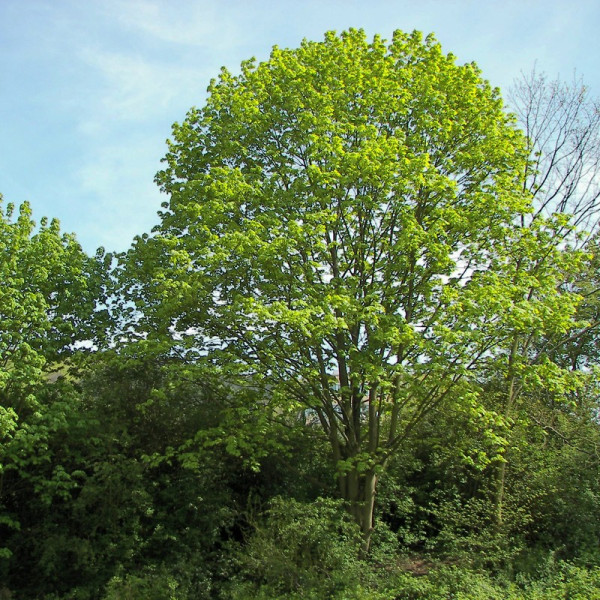
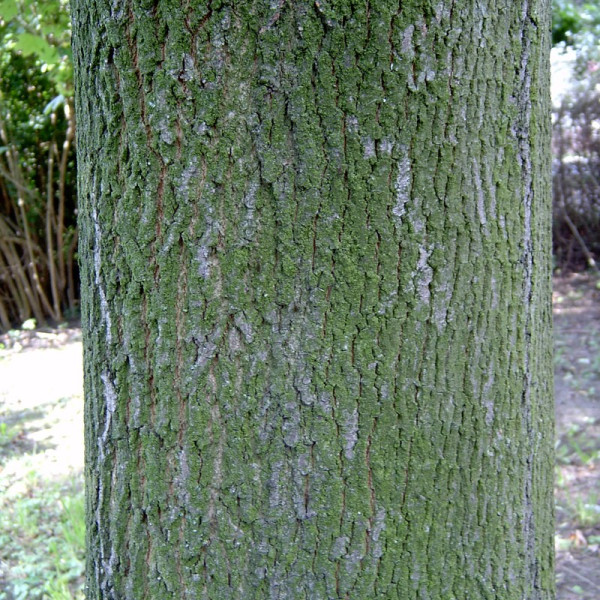


Norway maple, or plane maple, or platanoid maple / Acer platanoides - a species of maple widely distributed in Europe and Southwestern Asia. A deciduous tree 12–28 m tall with a broad, dense, spherical crown. The bark of young trees is smooth, gray-brown; with age it darkens to almost black and becomes covered with long, narrow, intertwining longitudinal cracks.
Branches are strong, broad, directed upward; brown or reddish-gray, with a terminal (apical) green or violet bud shaped like a turban with large bud scales.
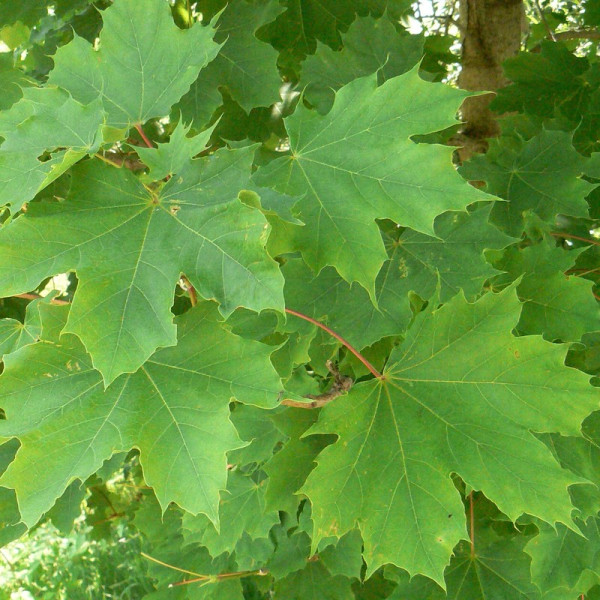
Leaves are simple, palmately lobed, opposite, with 5–7 serrate, coarsely toothed lobes, pointed at the ends of the lobes, glabrous, up to 18 cm long. Dark green above, paler beneath; in autumn they turn yellow or orange and then fall. A characteristic milky sap is released from the petioles and veins of a broken leaf.
Botanists and phenologists consider the beginning of sap flow in Norway maple to be the onset of spring in the plant world.
Flowers
Flowers are fragrant, glabrous, bright, yellowish-green, gathered in a corymb of 15–30; they appear in the first half of May before and during leaf expansion. Norway maple is a dioecious plant, i.e. male and female flowers usually open on different trees. It is pollinated by insects.
The nectary is a flat ring and is located between the petals and the ovary; the bases of the stamens are immersed in it.
The fruit is a double samara, splitting into two one-seeded indehiscent fruitlets, with two long (3.5–5.5 cm) wings diverging at an obtuse angle or almost horizontally, which can carry the seed over a long distance. Seeds are glabrous, with a large green coiled embryo, without endosperm, flattened; they ripen at the end of summer and may remain on the tree during winter. The seed coat is thin. Fruiting is abundant and annual.
During the first 3 years it grows rather quickly; the annual growth of a young tree sometimes reaches a meter. It begins to bear fruit after 17 years. In nature it lives up to 150 years.
In morphology, Norway maple is similar to sugar maple (*Acer saccharum*). They can be distinguished by the sap released from the leaf petioles. In sugar maple it is transparent, whereas in Norway maple it is milky. Autumn leaves of Norway maple are most often colored a simple yellow; orange and red shades are uncharacteristic for it. In contrast, sugar maple leaves are much more brightly colored orange. The bark of sugar maple is coarser and rougher, whereas Norway maple has only narrow cracks. Sugar maple leaves are more triangular in shape, whereas Norway maple leaves are more spread out. Seeds of sugar maple are spherical; those of Norway maple are flattened. The buds of Norway maple are reddish-green; those of sugar maple are pure green.
Distribution of Norway maple
In nature it grows in deciduous or mixed forests singly or in small groups, on forest edges; it rarely forms pure stands, mainly on slopes of river valleys. It produces abundant self-seeding.
It prefers moist, fertile, well-drained soils. It is sensitive to low nitrogen content, saline soils, and waterlogging. It grows poorly on sandy, clayey, or lime-rich soils. It is shade-tolerant, but with age it gradually loses this quality. It is winter-hardy — USDA hardiness zone 3 — and tolerates fairly low temperatures. It is included in the Red Book of Karelia.
Cultivation of Norway maple
In nature it reproduces by seeds. In garden culture and park construction it is propagated by seeds, root suckers, in vitro, and garden forms by grafting.
Seeds require stratification at 0–3° for 2–3 months. At 5–7° its duration increases. Stratification at 0–3° can be shortened to 1.5–2.5 months if the seeds are then germinated at 10°. Isolated embryos start growing slowly and not all of them. Treatment with stimulants has a positive effect on seeds — after this, 50–80% of seeds germinate in warmth within 2–3 weeks.
Norway maple is widely planted in gardens, parks, and along city roads. It is decorative throughout the growing season. It produces abundant stump sprouts. It tolerates transplanting and urban conditions well, and is wind-resistant. Within its range it is one of the main species for landscape gardening and park construction. It is valued for its large size, dense crown, slender trunk, and ornamental foliage. It is used for single and alley plantings and colorful groups. Its autumn attire is especially effective against a background of coniferous trees. It has been in garden culture since ancient times.
Honey plant. It is of great importance for beekeeping as an early honey and pollen plant. Maple honey belongs to the light varieties with excellent taste qualities. From 1 ha of flowering Norway maple, bees collect 200 kg of honey. The wood is used for handicrafts and in furniture production. The leaves were used as dyes for wool.


There are no reviews for this product, be the first to leave your review.


No questions about this product, be the first and ask your question.
