 All about product
 Reviews
 Questions
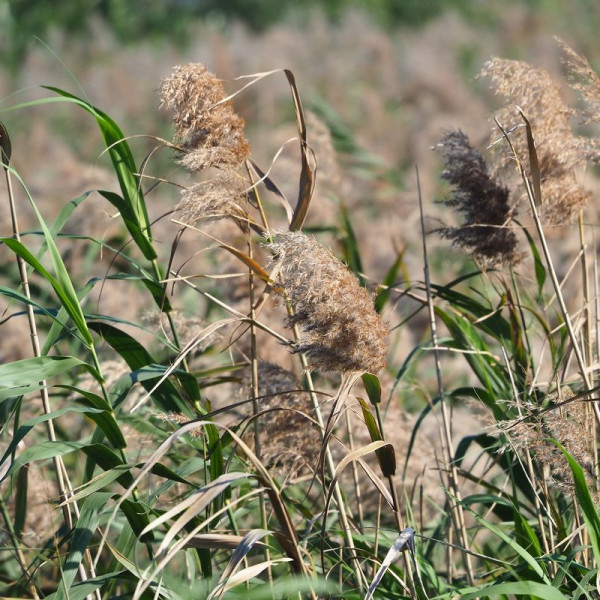
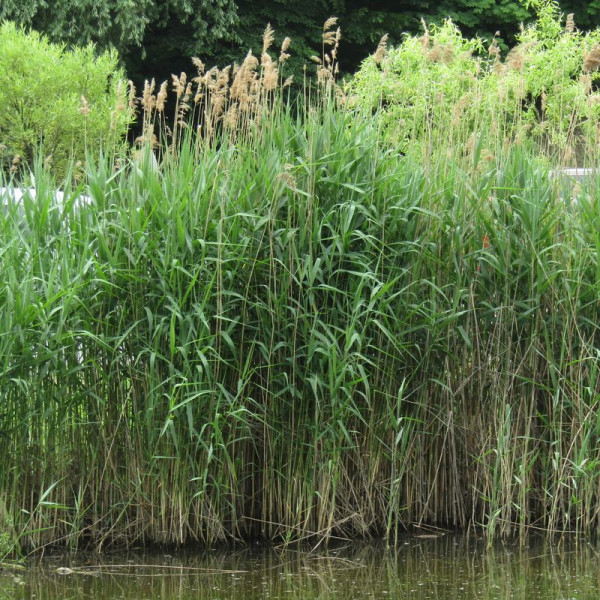
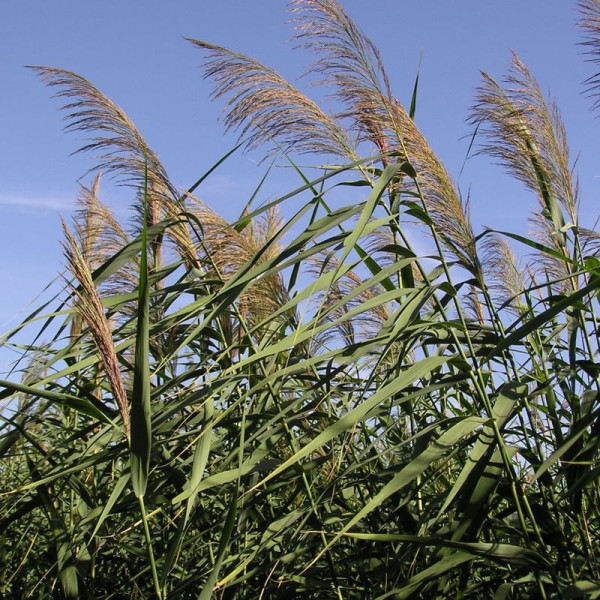

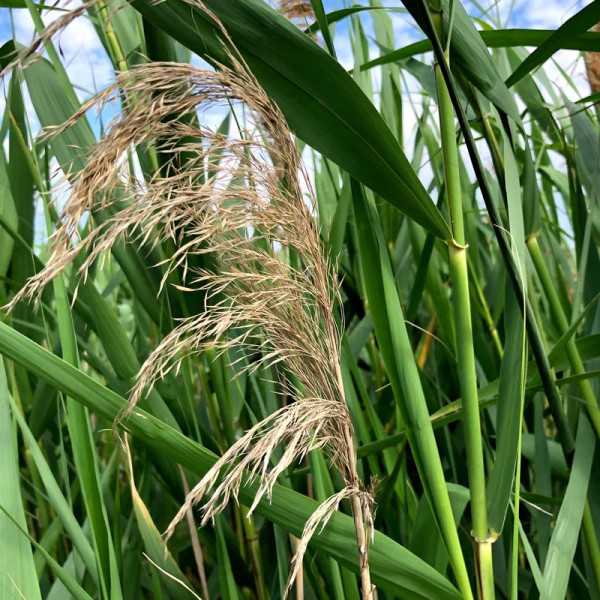
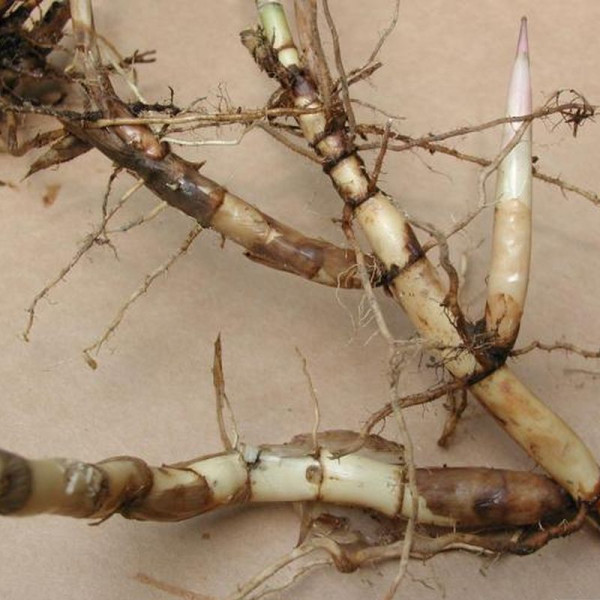

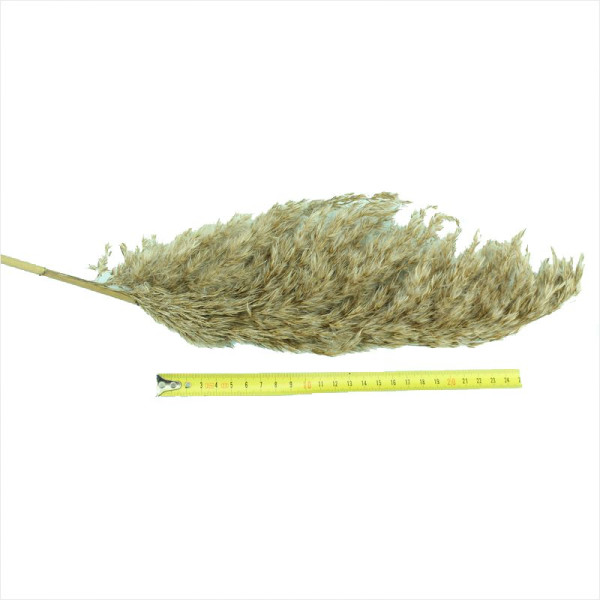
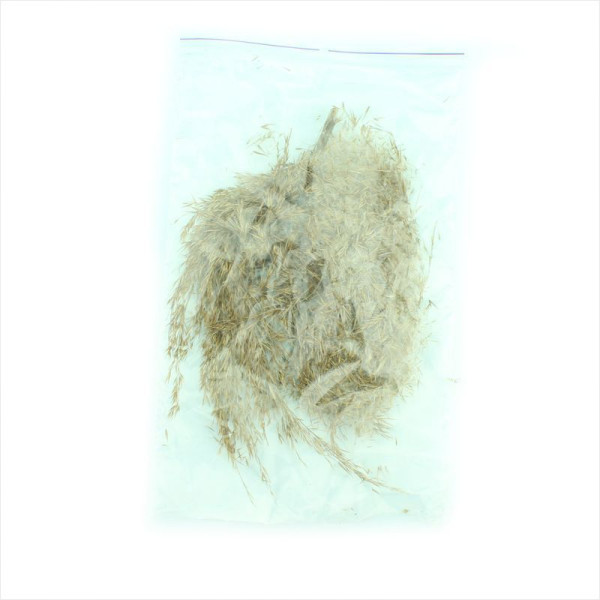


Common reed or southern reed / Phragmites australis - this is a tall, robust, perennial grass that usually grows in wetlands and along the shores of water bodies, but it can also occur far from open water. It belongs to the grass family (Poaceae). The plant has stiff, broad leaves and a large loose inflorescence, forms colonies, and spreads by means of strong rhizomes.
The inflorescences are purplish during flowering and become gray when in fruit. Thanks to its purification properties, it is one of the main species used in constructed wetland treatment systems. It is important for wetland reclamation, shoreline stabilization (including areas exposed to wave action), and water purification.
The plant forms a dense basal clump of narrow leaves, from which tall, upright flowering stems rise and arch outward like a fountain. Depending on growing conditions and care, it can reach up to 4 m in height.
The leaves are smooth, linear, gray-green, up to 80 cm long and 4 cm wide. The stems are upright, jointed, and hollow, becoming woody after flowering. The flowers are fluffy panicles ranging from light brown and yellowish to purple, composed of numerous small spikelets that open from July to September; the panicles are 20–40 cm long. The strong oval rhizomes can penetrate up to 2 m deep and spread up to 3 m wide. The fruits and seeds are small, brown, and covered with many white hairs. Flowering occurs from July to September depending on climatic conditions.
Seasonal growth is approximately 60 cm, depending on growing conditions, soil quality, and moisture availability.
The plant grows well in full sun and partial shade. It prefers moist soil, but thanks to its deep root system it can tolerate short periods of drought. It adapts to a wide range of soil types, though it grows best in moist, well-drained soil with a neutral or slightly acidic reaction.
Common reed is widely used in landscape design because of its expressive vertical form and airy flower panicles. It is often planted as a specimen plant in garden compositions, where it creates striking accents. This grass is effective for creating textural contrasts in mixed borders when combined with other perennials and ornamental grasses. It is also suitable for planting along the edges of ponds and streams or as part of naturalistic landscapes, where it helps support biodiversity.
In addition, thanks to its resistance to diseases and pests, common reed is an excellent choice for gardeners seeking hardy, low-maintenance plants for their landscapes.
Climate zone / hardiness zone: USDA 4 (approximately −34 °C to −29 °C).

There are no reviews for this product, be the first to leave your review.


No questions about this product, be the first and ask your question.
