Autumn is not only the time for harvesting for many gardeners, but also... the time for new sowings!
From approximately mid-October, the season for sowing and planting cold-hardy vegetables and greens of many varieties in open ground begins. This method of sowing garden crops, known as «winter sowing», has a number of advantages.
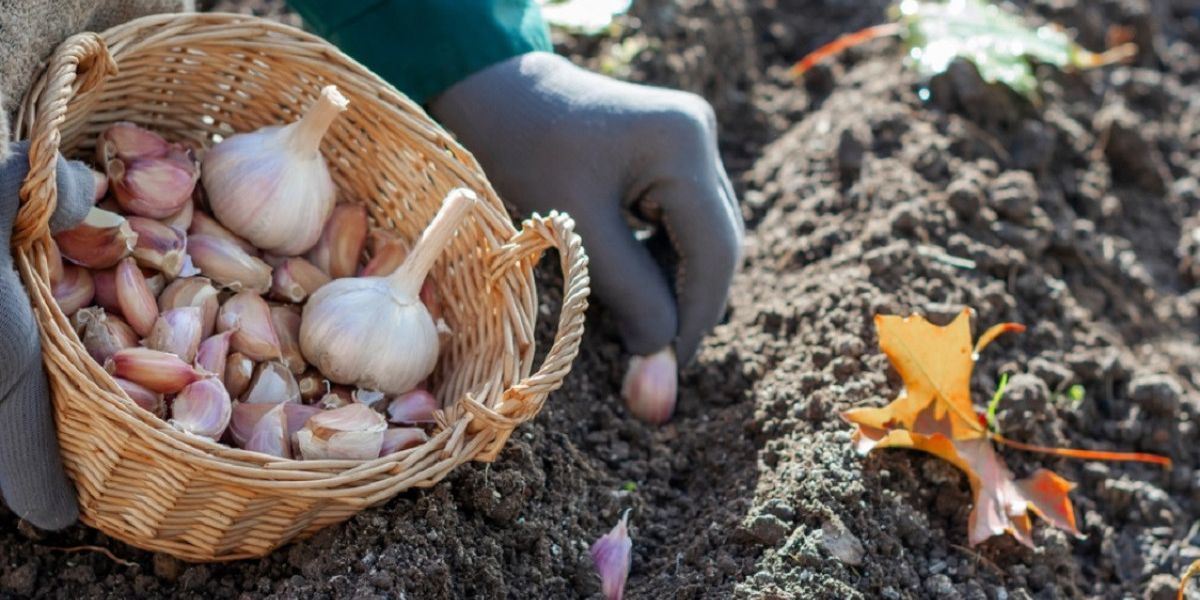
Hardened plants usually grow stronger and larger than their traditionally planted «relatives»; the harvest in the following season can be collected 2-3 weeks earlier than usual; there will be no need to spend time preparing beds and sowing in spring; if seedlings do not emerge, you will still have time to repeat the sowing.
What garlic is planted in autumn
Before winter, so-called winter garlic is planted. Its bulbs need to overwinter under low-temperature conditions to mature, so the crop is planted not in spring (like spring garlic), but in autumn.
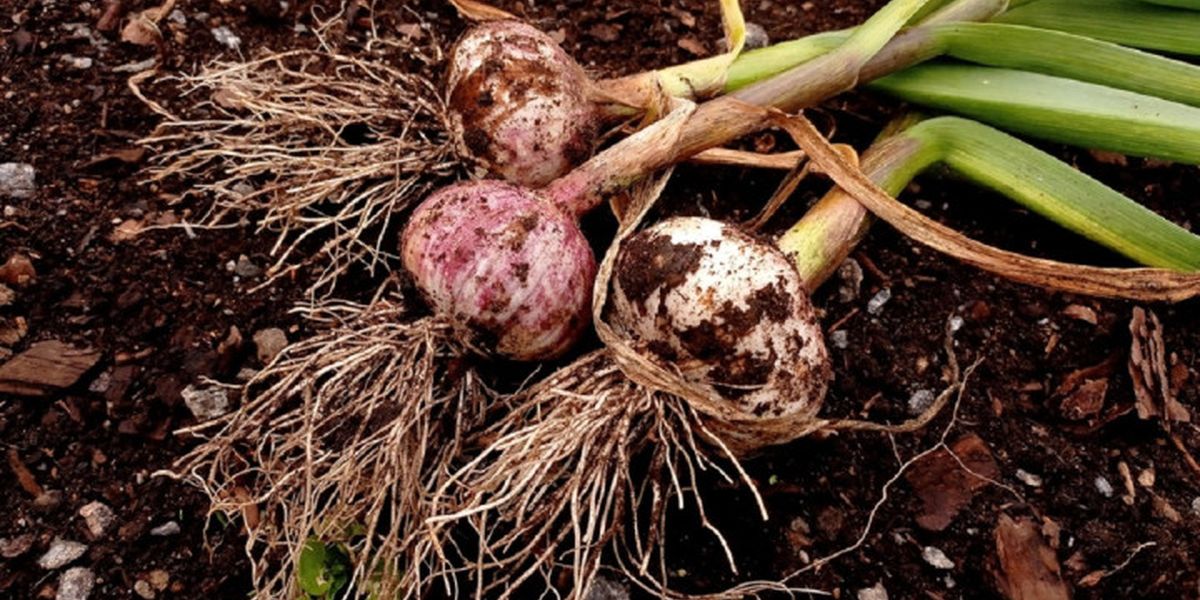
Winter garlic is not «better» or «worse» than spring garlic; it simply has its own characteristics.
- Winter garlic forms significantly larger bulbs compared with spring garlic – the difference can reach 2-3 times. At the same time, there are fewer cloves in a bulb than in spring garlic varieties.
- However, in winter garlic, the cloves are larger and arranged in a circle around the central stem, while in spring garlic (which has no central stem at all), the cloves grow in a spiral: the larger ones are on the outside, while the smaller ones are inside the bulb.
- The harvest of winter garlic ripens earlier than that of spring garlic.
- Winter garlic has a higher germination rate; the plants are less demanding in terms of growing conditions and much more resistant to low temperatures.
- The cloves of most winter garlic varieties have a richer, hotter taste and a more pronounced aroma than most spring garlic varieties.
- Plants of winter varieties often produce «scapes» (long, unopened flower stalks), which are not characteristic of spring garlic – these juicy garlic scapes with a pleasant taste are widely used in cooking.
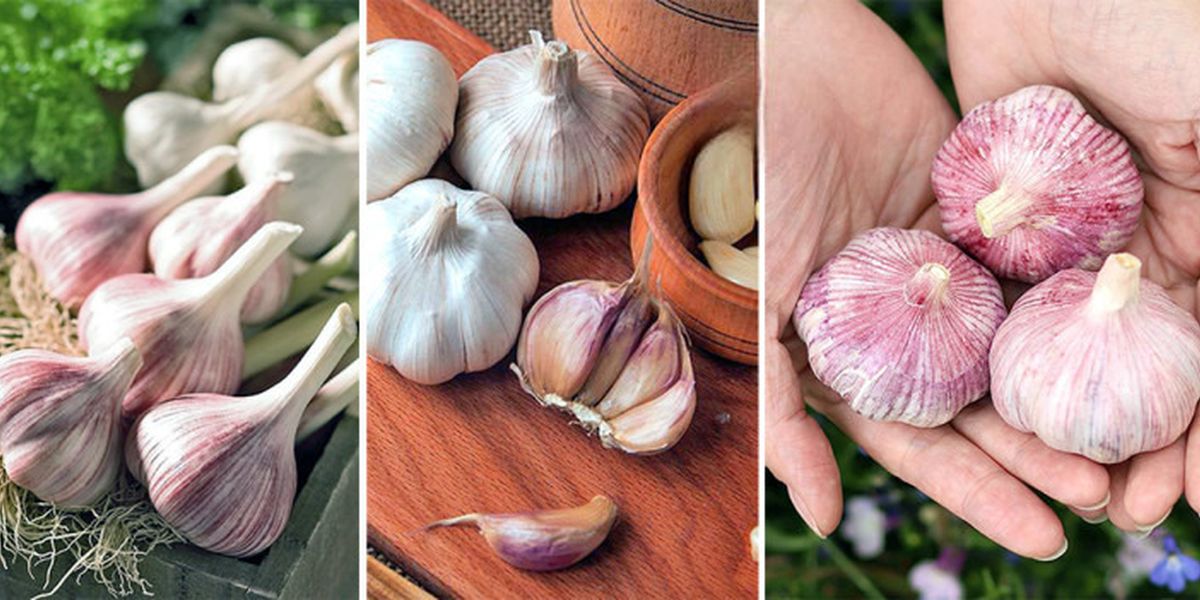
Like garlic of any other varieties, winter plants differ in regional suitability, ripening times, yield, care requirements, tendency to bolt, resistance to diseases and adverse weather conditions, bulb size and shape, color of the dry outer scales, flesh flavor, and storage life.
The quality of the planting material directly affects the harvest, so choose the variety responsibly by studying all the characteristics of the plants and selecting those that are most important to you.
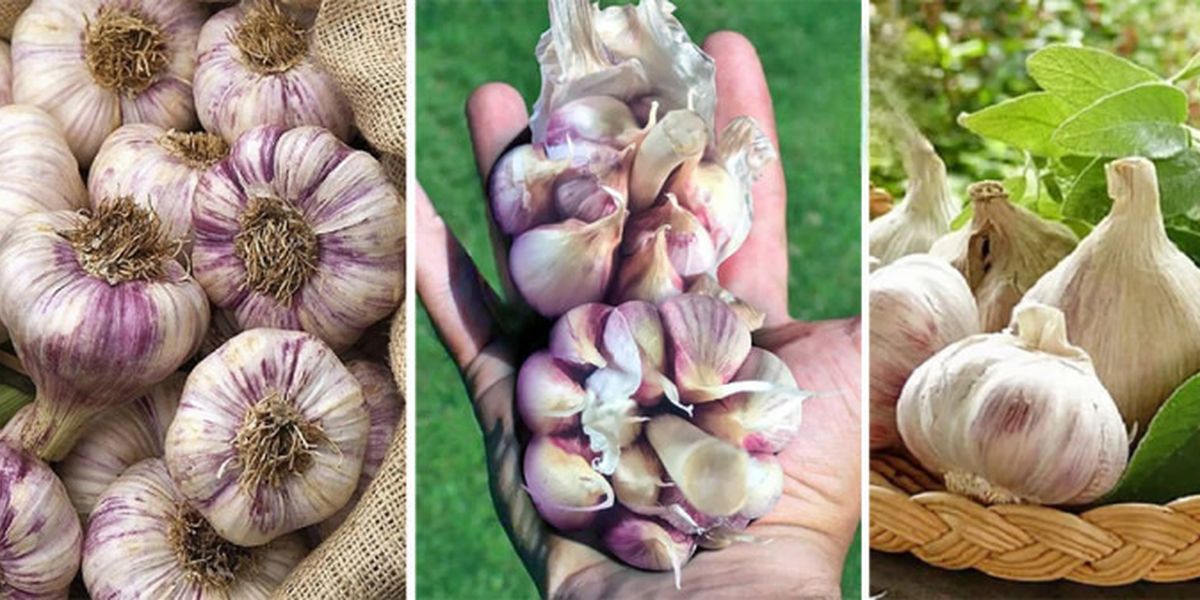
The quality of winter garlic planting material can be easily determined by its appearance: the bulb should be firm and well matured, with dry outer scales and neck, an intact, undamaged basal plate, clearly defined cloves of approximately equal size, and no signs of rot.
When to plant winter garlic
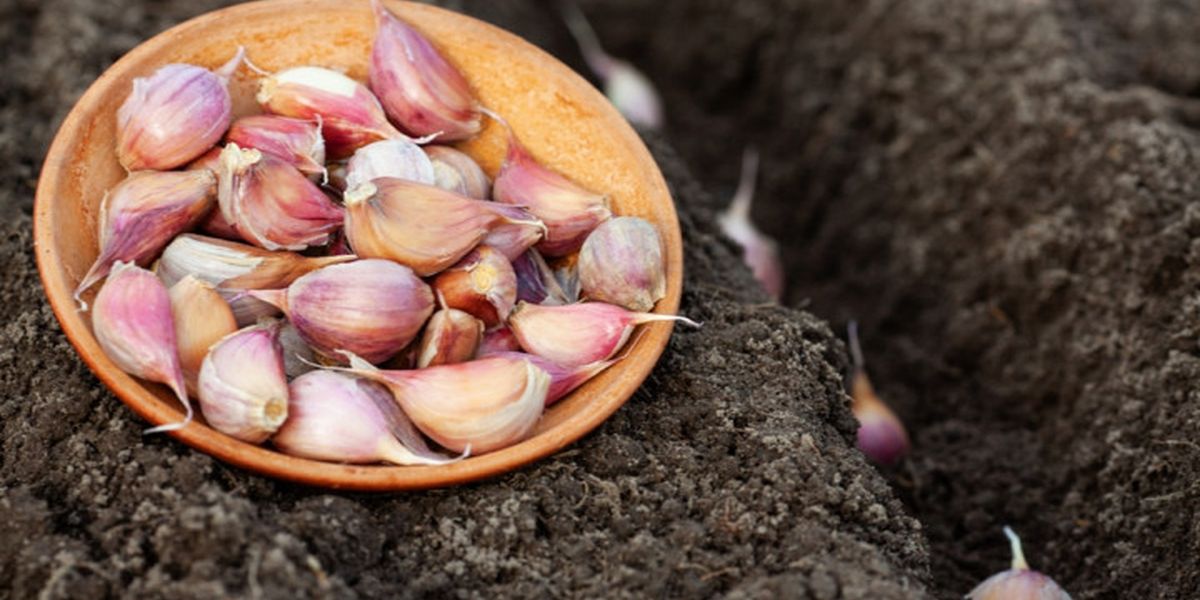
Winter garlic is planted in the first half of October (approximately one month before the expected severe cold and soil freezing). The cloves need about 35-45 days to root at low positive temperatures.
It is better to rely on the long-term forecast and thermometer readings. For winter sowing, the soil temperature at a depth of 5–10 cm should be no higher than 5–8°C, while the daytime air temperature should still remain at around 8–15°C.
Among the folk signs indicating that the right time for autumn garlic planting has arrived are birch leaves turning yellow and cherry leaves falling.
Just in case, keep in mind that if warm weather with above-freezing air temperatures persists for a long time after planting, winter garlic may «wake up» prematurely and sprout in autumn. What should you do in this case?
If the garlic shoots do not exceed 10 cm in height, this is not critical: they can simply be mulched again with any suitable material, as immediately after planting (see below). If some bulbs die, spring garlic can be planted in their place in spring.
The key rule of autumn planting can be formulated as follows – it is better to plant garlic a week later than the optimal time than a week earlier. Natural cooling will stop premature sprouting, while the root system will still have time to develop even with late planting.
How to plant garlic in autumn
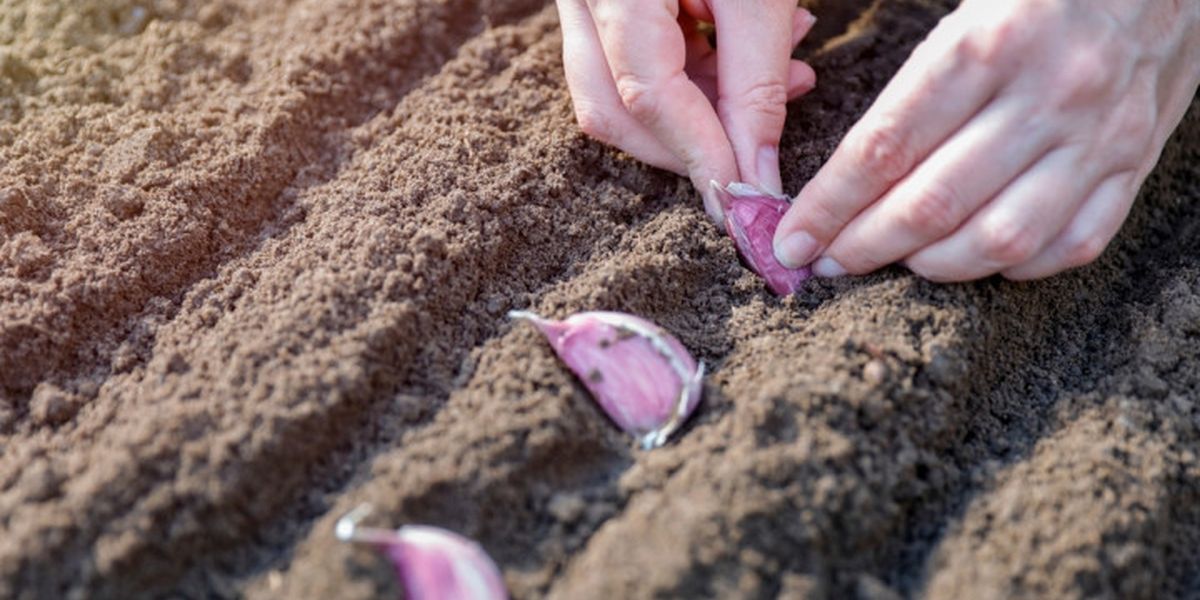
For garlic, choose a bright, draft-protected spot in the garden where water does not stagnate. Winter garlic prefers sandy loam soils with neutral acidity that are light, loose, and rich in organic matter.
Acidic soils should be limed one year before planting.
The best preceding crops for garlic are cucumbers, zucchini, early and cauliflower, as well as legumes, leafy greens and cereal crops, and green manures from the Brassicaceae family. The worst option is if onions, carrots, or potatoes were grown on the same bed.
The bed for winter garlic should be prepared in advance – a couple of weeks before planting, add a bucket of mature compost or 3-5 kg of vermicompost plus a glass of ash per 1 sq. m of bed. In heavy clay soil, it is useful to additionally add limed raised bog peat and leaf compost. In excessively light sandy soil, you can add sapropel, manure compost, or lowland peat. Of mineral fertilizers, 30-40 g of superphosphate and 20 g of potassium sulfate can be applied per 1 sq. m.
Distribute the fertilizers evenly over the soil surface, then dig the soil to half the depth of a spade or loosen it with a garden fork.
The main method of planting winter garlic is by cloves. To do this, select the largest bulbs without damage or signs of disease, then separate them into cloves, taking care not to damage the protective skin and basal plate, where the beginnings of new roots are located. This should be done immediately before planting – this will keep the basal plate intact and prevent the lower part of the cloves, where the roots will form, from drying out.
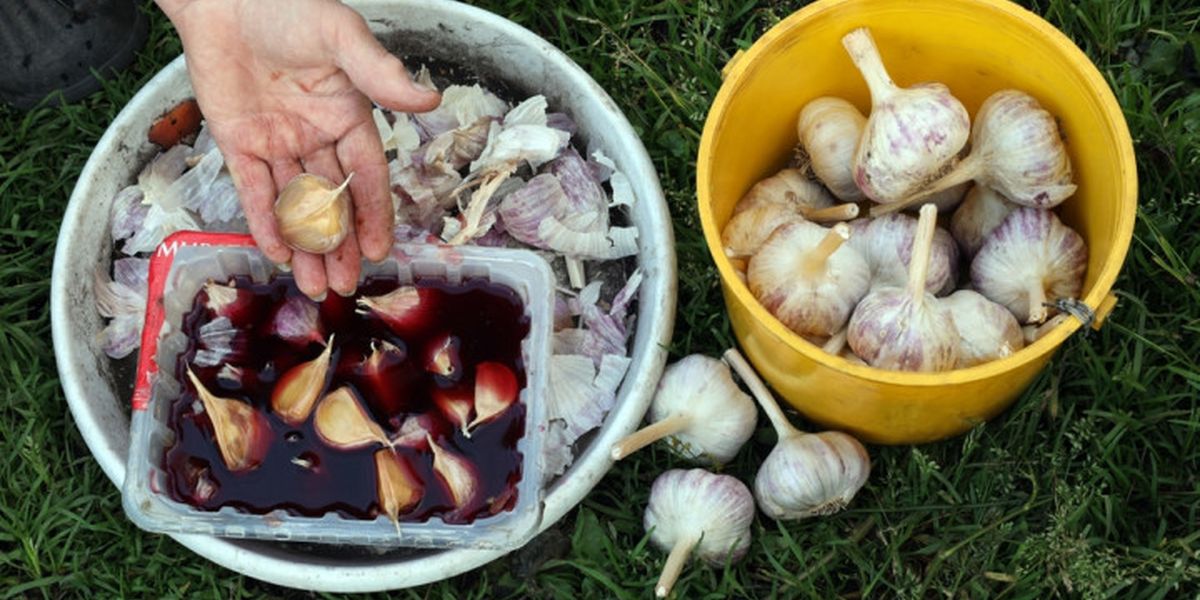
The day before planting, soak the garlic cloves for 30-60 minutes in a solution of a biological fungicide based on Bacillus subtilis (Fitosporin-M). The rows should also be watered with the biological fungicide solution before planting, and the garlic should be planted in moist soil. When preparing the planting material, make sure there are no remnants of the old cork-like basal plate on the cloves, as it prevents new roots from developing.
Plant the cloves with the basal plate facing down, following this spacing: 20-30 cm between rows and 8-10 cm between cloves. The planting depth depends on the size of the cloves and the type of soil – on average, 2.5 times the height of the clove (5-6 cm). After planting, dust the cloves with a mixture of ash and tobacco dust to protect the garlic from soil pests and provide additional nutrients.
Carefully fill the furrows with loose, fertile soil mixed with compost. Lightly firm the soil with your palms, but do not compact it. If the soil is dry, water moderately with warm water. Waterlogging is unacceptable – it is the main cause of planting material rot.
After planting, the bed should be mulched. Hay, straw, compost, leaves, spruce branches, peat – the mulch layer should be at least 5-10 cm thick. If the mulch is lightweight, you can protect it from being blown away by wind with film, spunbond, or cardboard. The main thing is to secure it around the edges to the ground using boards or bricks.
Properly planting garlic before winter ensures a reliable harvest of high-quality bulbs that will store excellently until the next season.
And to maintain productivity, it is recommended to renew the variety every 3-4 years by sowing winter garlic from seeds – small aerial bulbils that form on garlic scapes. They are also often called «bulbils». Sowing from seed helps rejuvenate the planting material and increase its quantity.
Write a comment